Thursday, September 8, 2011

Tokyo/Vietnam July 2011 - Exploring Hoi An

***This post is part 14 of a full trip report. The index can be found here***

Out of all the places I visited in Vietnam, Hoi An was my favorite. Something about this town just resonated with me. In 1999, the old town area was declared a World Heritage Site by UNESCO, and it still remains the central gathering place for the populace. The peculiar thing about Hoi An is that much of the old town area has retained the same streets and buildings from centuries ago, so it is often said that this is a place suspended in time, forgotten by the manic economic expansion seen elsewhere in the country. I fully understood the description the moment we arrived.


It wasn't always this way, Hoi An in the 16th and 17th century had perhaps the largest trading port in Southeast Asia, and as a result generated tremendous wealth and attracted immigrants from all over the world including Japan, China, Europe, India, and the Middle East. By the 1800's however, Hoi An lost its luster to the French established ports in Da Nang to the north. The area became stagnant, and remained relatively unchanged for the next 200 years, until its recent establishment as a tourist hub.


It's easy to see why so many tourists are flocking here nowadays... Hoi An is an absolutely beautiful town. Without the rapid construction boom engulfing the rest of the country, Hoi An has retained it's slow, idyllic rhythm and preserved it's centuries-old architecture. It just feels different from the rest of Vietnam, and it's probably because it simply is. Many of the narrow streets in old town are closed off to cars and motorbikes, and as such, it has become a bicyclists' paradise for exploration. I must say this about Hoi An: there isn't a beautiful monument here, or breathtaking vistas, or ancient palaces, but what makes this place special is the atmosphere it just exudes out of every corner and alleyway. An early morning stroll through the bustling central market, a quick glance into the centuries old houses along the riverfront, a walk by the colorful lantern shops in the evening, a sampling of the Hoi An delicacies in a random hole-in-the-wall restaurant... this place just makes you feel like all your cares in the world are gone.


Hoi An riverfront


As a method of crowd control and revenue generation, you must now purchase a $5 USD ticket at one of many kiosks all around Hoi An to access specific sights in old town. These include museums, historic houses, congregation halls, and traditional performances. You also need the ticket to access the famous Japanese covered bridge. I used the ticket to see the old Tan Ky House, the Chinese Meeting Hall, as well as the Hoi An Museum of History. Mind you, these are not particularly exciting activities, but I'm a person who loves reading about history and experiencing different cultures, so for me it was the perfect way to spend a morning.

Japanese covered bridge, originally built in the late 16th century


Chinese Meeting Hall

Old Tan Ky House

Later in the afternoon, we decided to ride our bikes to Cua Dai Beach, just a few miles outside of old town. The beach is very popular with the locals, and it was fun to just lounge around for a bit, buy a drink, and chat. Starting around 5-6 pm every day, however, the monsoon rains arrive and a torrential downpour begins that doesn't let up until past dinner. During this time, I would hide under the covered patio of our hotel and enjoy a good book.

Scenary on the bike ride to Cua Dai Beach


Cua Dai Beach

There are some delicious specialties of Hoi An, the most famous of which is probably the white rose dumpling. The skin is made from translucent rice paper, and it is filled with a small amount of shrimp and topped with a generous helping of fried onions. Vietnamese cuisine here takes on a distinctive Chinese flair as much of the old population from centuries ago were immigrants from the Fujian and Guangdong provinces of China.

White rose dumplings

Hoi An is also famous for it's skilled tailors. There are literally hundreds of tailors in old town, ready to make shirts, dresses, and suits for much less than you can find in Western countries. Of course, the more you pay, the higher the quality, but suits typically run between $80-$250. My friend had a button-down shirt that he loved, so he brought it to one of the highly rated tailors, Mr. Xe, and had it copied with 7 different fabrics that he chose himself. Total cost per shirt ended up being about $15... while the original cost $80.

Mr. Xe tailor shop

One final note: the cynic in me did at times feel like Hoi An was a bit Disney-fied... with much of old town catering to tourists. But at the same time I also noticed that locals were enjoying the sights and sounds just as much as the tourists, and the central market in old town was still very much a real, local affair catering to their daily needs. Who knows what time will bring to Hoi An in the next few decades, but if it is able to retain its charm and atmosphere without being completely overrun by tourists, then locals and visitors alike should be able to coexist in harmony.

Tokyo/Vietnam July 2011 - Ha An Hotel Hoi An

***This post is part 13 of a full trip report. The index can be found here***

The Ha An Hotel is ranked #2 out of 64 hotels in Hoi An, with more than 500 reviews (almost all of them 4 and 5 ratings). That in itself should be enough to convince any reader to give it a try. From my previous posts, it's probably pretty clear that some of the best values in Southeast Asia are the locally owned hotels. In Vietnam, almost all local hotels provide a complimentary breakfast buffet, and we're not just talking about a continental breakfast. They typically consist of a huge variety of fruits, pastries, hot entrees, and made-to-order selections such as omelettes, pancakes, and even pho. Not only that, most hotels even provide an in-room computer or laptop with free internet for your use. All of these things could be found at the Ha An Hotel, with plenty of extras to spare. And for $55/night, it's an incredible value as well.


We arrived by private car from Hue a bit early on the day of check-in. The hotel is perfectly located close to the center of old town, yet the street it sits on is calm and serene. Since our room wasn't ready yet, they suggested we lounge for a bit in the beautiful courtyard garden area. There were a number of tables and chairs set up on the lawn, and an outdoor buffet that operated during breakfast hours. The entire courtyard area was really beautifully maintained, as was the building itself. We did notice a fair amount of noisy construction going on in the building behind the buffet... presumably renovations for the actual indoor restaurant. The noise never started too early or went too late though, so it wasn't a problem at all during the entire stay.

Courtyard area

Welcome drinks and fruit

We took a seat in the courtyard and were served welcome drinks and a plate of fresh-cut fruit. We read for a little while, but after about 40 minutes, we started to wonder what was going on. I finally went into the lobby and asked if our room was still being prepared, and the lady said no, it was already ready! I was a little confused, but realized later that they probably saw us fully engrossed in our books and didn't want to disturb.

The room itself was bright, clean, and nicely decorated. It wasn't by any means luxurious or expansive, but it was more than fine for 2 nights. A complimentary fruit basket and bottled water were also provided. I don't think we actually booked a room with direct access to the garden courtyard, but that's what we were given... and whether or not this was an upgrade I'm not quite sure, but it was definitely a pleasant surprise. Looking back, one of the most memorable moments of this trip was sitting outside the room in our private lounge area reading a book while the torrential monsoon rains passed at dusk. It was one of those experiences you have on vacation where everything felt perfect and you just stare out and reflect. Absolute zen :)


Lounge area outside our room

The breakfast buffet the next morning was very, very good. Not as spectacular as the Hanoi Elegance (seriously, nothing will ever live up to that hotel), but the selection was excellent and the taste was up to par as well. I also appreciated the outdoor setting, though even at 7 am it was hot and muggy.


One of the best things about the Ha An Hotel was that they provided free bicycles for guests to use. Hoi An was the ideal town to explore on bike since the old town area was just small enough, and many narrow streets were closed off to cars and motorbikes. We used them extensively, exploring the sights around town for an entire day and even riding to the beach a few miles out. The 2 days here were probably the best of the entire trip, and I really wish I could have stayed longer. I will be going into more detail in the next post!

Complimentary bicycles to explore Hoi An

Ha An Hotel at night

A couple of faults regarding this hotel. It wasn't made perfectly clear to me prior to arrival that they would only accept cash as payment. Or maybe I just didn't read the fine print close enough. Either way, it was a minor annoyance, and luckily I had enough US Dollars (which they do accept) and Vietnamese Dongs to cover the entire cost. Just be sure to carry at least some cash on you, or you may have trouble withdrawing larger sums from the local ATMs. The only other thing I noticed during the stay was that the ladies behind the front desk weren't particularly friendly or helpful. There was never a smile or greeting when passing, and questions were often met with quick answers that felt a bit impersonal. However, the restaurant staff and those working the courtyard seemed a lot friendlier. These were all very minor issues though, and I would gladly recommend the Ha An Hotel to anyone planning a visit to Hoi An.

Wednesday, September 7, 2011

Tokyo/Vietnam July 2011 - Private Car From Hue To Hoi An

***This post is part 12 of a full trip report. The index can be found here***

The distance between Hue and Hoi An is only about 80 miles, but the drive can take upwards of 3 to 4 hours, depending on the route and the number of stops along the way. I had done some research on this drive prior to leaving for Vietnam, so I had a good idea about how much we should roughly pay and what to expect along the way. I contacted the Orchid Hotel in Hue before arrival and confirmed the cost of $65 for both my friend and I in a private car if we booked directly with them. While this was a little more than the $50-$60 some people were able to bargain for on their own, I felt like the extra $10 or so really wasn't worth the hassle or headache. Once we arrived at the hotel, we further confirmed that there were going to be 4 stops along the way: Lang Co Beach, Hai Van Pass, the "Cha Am Museum", and Marble Mountain. When booking a private car, however, definitely make sure you will be going over Hai Van Pass. Otherwise, they may take the newer tunnel that goes underneath the mountain, which, while a lot faster, doesn't provide for much scenery as you can imagine.

Typical SUV cargo in Vietnam: dirt


The private car arrived on time at 8:00 am on the morning of departure and soon we were on our way. I must say, Central Vietnam felt like a completely different planet than Hanoi. Gone were the traffic and chaos, instead it was as if we were transported to some tropical island somewhere, especially as we drove towards Lang Co Beach and up to Hai Van Pass. Lang Co is a beautiful stretch of white sand beach that is still fairly undiscovered by international tourists. Infrastructure is lacking around the area, but there were plenty of new hotels going up when we passed by. We pulled up to a local resort for our first stop, and the driver told us we could take a break here to take pictures, go to the restroom, etc. While Lang Co Beach was beautiful, there really wasn't much to do around there, and we weren't about to lay out in the 100°F heat, so we chilled for a bit, snapped a few photos, and then headed out again.

Lang Co Beach

Lang Co Beach vista point

The windy road up to Hai Van Pass provided one of most scenic drives I've ever been on. The vistas are truly stunning. Our driver was thoughtful enough to stop at a number of vista points along the way for us to take a few photos of the breathtaking views. Hai Van Pass itself was rather interesting... right at the crest, many locals have set up shop selling all sorts of touristy souvenirs. They were extremely pushy in trying to get you to buy things, and it become slightly annoying as I hadn't experienced this to such a degree in Hanoi or Hue. If you go to the other side of the road, there are old American army bunkers and great spots to view both the Lang Co Beach area as well as the Da Nang Beach and the city further ahead.

Hai Van Pass looking back towards Lang Co Beach

Panorama of Hai Van Pass (left is Da Nang Beach, right is Lang Co Beach)

Remnants of American bunkers

It was a straight shot down to Da Nang after descending from Hai Van. We were unaware of what the "Cha Am Museum" was, but I figured it would be some historical museum about the region... boy was I wrong. This turned out to be a marble sculpture warehouse selling all sorts of useless overpriced crap, from giant Buddha statues to tables and vases. Needless to say, we stayed for about 10 minutes and walked out (though I'm very embarrassed to say I did buy a few small turtle sculptures to give as gifts).

We were already a little miffed about the "museum" we had just visited, so we decided to just take a quick 5 minute look at the Marble Mountain, which was only a short drive away. Like its name suggests, marble used to be extracted from the series of 5 hills that jut out from the relatively flat terrain around Da Nang. There are stairs you can climb to the top of some of these hills, and there are also some interesting Buddha statues along the way, but since we wanted to just continue on to Hoi An, we snapped a few photos and went on our way.

Marble Mountain


After another half hour or so, we reached Hoi An earlier than expected, at around 11:00 am. I would say the private car is a great way to get from Hue to Hoi An. Avoid any sort of "museums" they try to take you to, but otherwise, it was a very pleasant and beautiful ride through Central Vietnam.

Friday, September 2, 2011

Tokyo/Vietnam July 2011 - Exploring Hue

***This post is part 11 of a full trip report. The index can be found here***

We only had one full day in Hue, so we took advantage of one of the many day tours that our hotel offered us upon arrival. Pickup was at 8:00 am, and the large tour bus was already filled with people. One thing I quickly noticed about tourists in Vietnam is that almost 90% of the Westerners we met were Australians. I suppose logically that makes sense simply due to proximity, but I had expected to see a lot more Americans, which in fact turned out to be quite rare. In any case, the tour bus was mostly filled with Aussies with a couple of Germans and native Vietnamese. Our tour guide was fairly fluent in English, though heavily accented, but he was very outgoing and friendly (and extremely talkative). In the middle of the tour, he even broke out into song on the bus!


Minh Mang Tomb


Tu Duc Tomb

We proceeded to visit 3 of the more well-known royal tombs outside of Hue: Minh Mang, Khai Dinh, and Tu Duc. Each had it's own unique style, though the Khai Dinh tomb was perhaps the most interesting. Built between 1920 and 1931, the monument is a clash of Eastern and Western influences, incorporating both French and traditional Vietnamese architecture. But perhaps most of all, it symbolizes the excess of the royal family even as the country submitted to French subjugation. Nevertheless, the Khai Dinh tomb is a lavishly constructed monument filled with beautiful mosaics of imported ceramics.

Khai Dinh Tomb


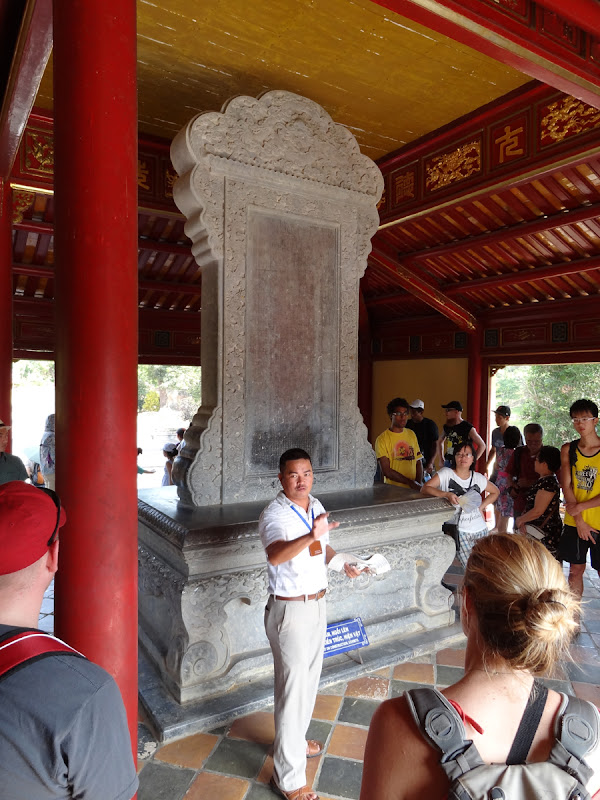
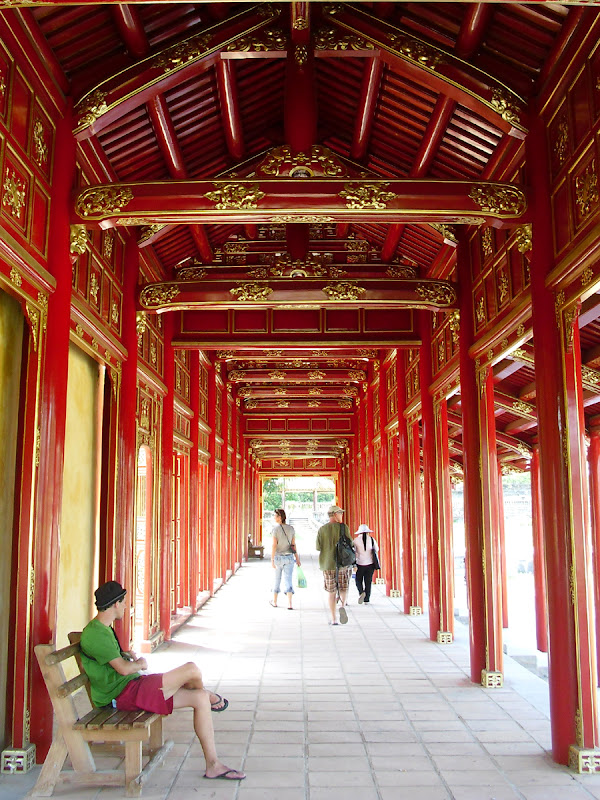
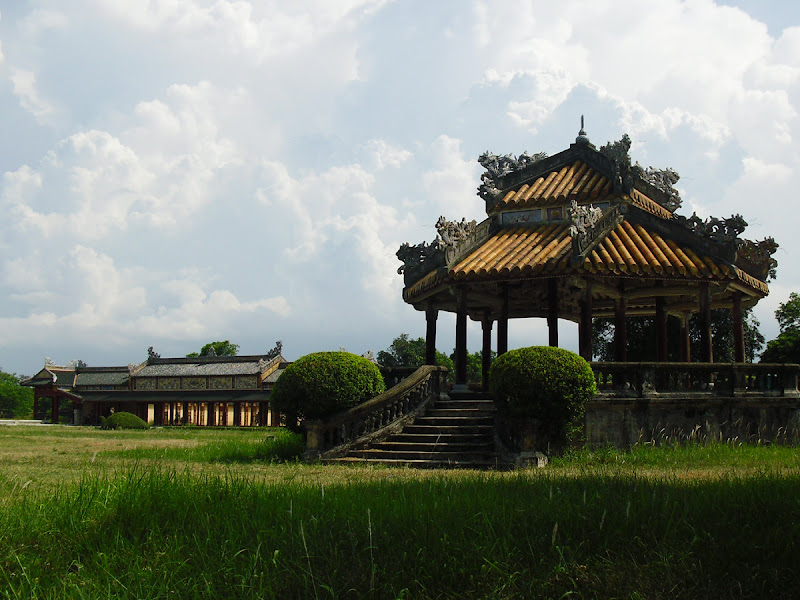
After the tombs, we went to visit the Citadel, or the Imperial Palace. I already had low expectations because I had read about the destruction the Vietnam War bombings had wrought... but even with low expectations, it was a sad sight to see. Besides the main palace gate and a few intact buildings here and there, not much remains of the sprawling complex. Restoration of the palace is currently in progress and could be seen everywhere, though there is quite a lot left to be rebuilt.

The Citadel


Restored hall


What most of the Imperial Palace looked like :(

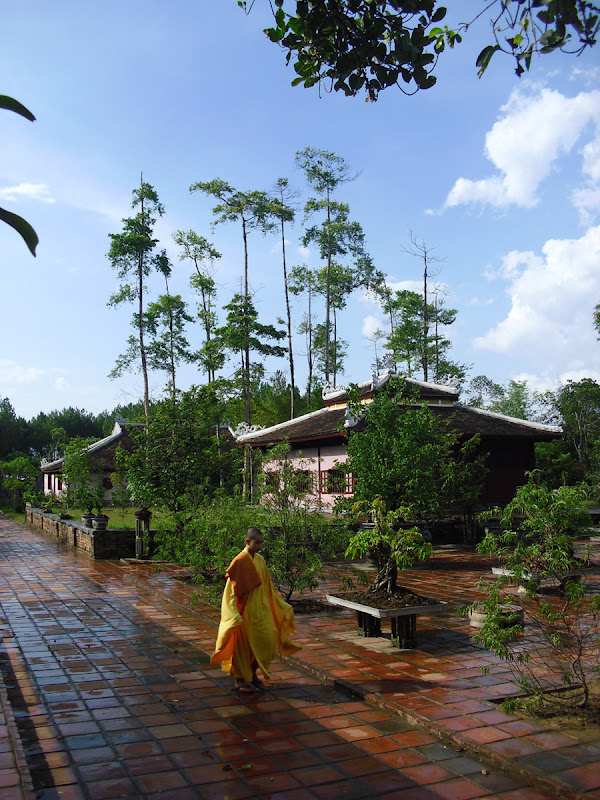
After a quick stop to the Thien Mu Pagoda and a lazy boat ride down the Perfume River, we arrived back in central Hue in the late afternoon. Overall, this full day tour was well worth it, and gave us a chance to see all the main sights in and out of town without having to worry about transportation or time.

Thien Mu Pagoda


Perfume River

Thursday, September 1, 2011

Uh Oh... Devaluation To British Airways Executive Club Miles Coming?

I received an email this morning from British Airways Executive Club detailing some changes coming in November to their rewards program. My first thought was... oh no, it's finally here.

For those who aren't aware, British Airways partnered up with Chase and offered up literally millions (if not billions) of miles at 100,000 per credit card both last year and this year. While this was fine and dandy for all the American customers who took advantage of this deal, most of us had a feeling that with so many miles being handed out like candy, a massive devaluation in their awards chart was bound to happen sooner or later. And it looks like it's happened a lot sooner than expected.

First off, with the British Airways/Iberia merger, it makes sense that there would be some cosmetic changes to their joint frequent flyer program. So as of November, British Airways Executive Club miles becomes "Avios" points. In addition, on the BA website detailing a couple of the more positive changes coming, it states that for shorter flight out of LHR (specifically to zones 1-3), they will now be offering a Reward Flight Saver option, which allows for reduced points redemptions with a fixed flat fee. Avios points needed for travel on BA-operated flights will not change from the current miles requirements for the most part, and some routes (such as JFK-LHR) will actually see a slight decrease. Finally, BA will also now be offering hotel and car rental redemptions similar to what AA rolled out last year.

Now for the bad news... and it may be really bad. The single partner award chart is completely scrapped, along with the BA + one partner award chart. In their place will be one single unified award chart that will serve all three purposes: BA only award flights, BA + one partner award flights, and single partner award flights. One of the best values in the current BA award chart is redeeming for a single partner award flight from North America to Asia for 50k/100k/150k miles, or North America to South America (even Easter Island) for 40k/80k/120k miles. If they change this to what the BA only award chart looks like, North America to Asia will jump to 120k/240k/360k! Now, granted, the new award chart numbers probably won't be as astronomical (since most North Americans won't be flying through London to get to Asia). But even then, this means a massive devaluation for Executive Club miles is imminent.

Worst of all, from this Flyertalk thread regarding the coming "enhancements", it sounds like this new award chart won't even be released until November 16th, when the changes will already take place and it will be too late for us to determine exactly which routes will be hiked and by how much. Perhaps that doesn't even really matter since there is a 99.9% chance that some sort of devaluation will occur across the board for single partner award flights. With this ominous cloud hanging over everyone's head, I can only think of one thing to do between now and November: burn as much of your BA Executive Club miles as you can before the changes take effect!